Wetland Restoration
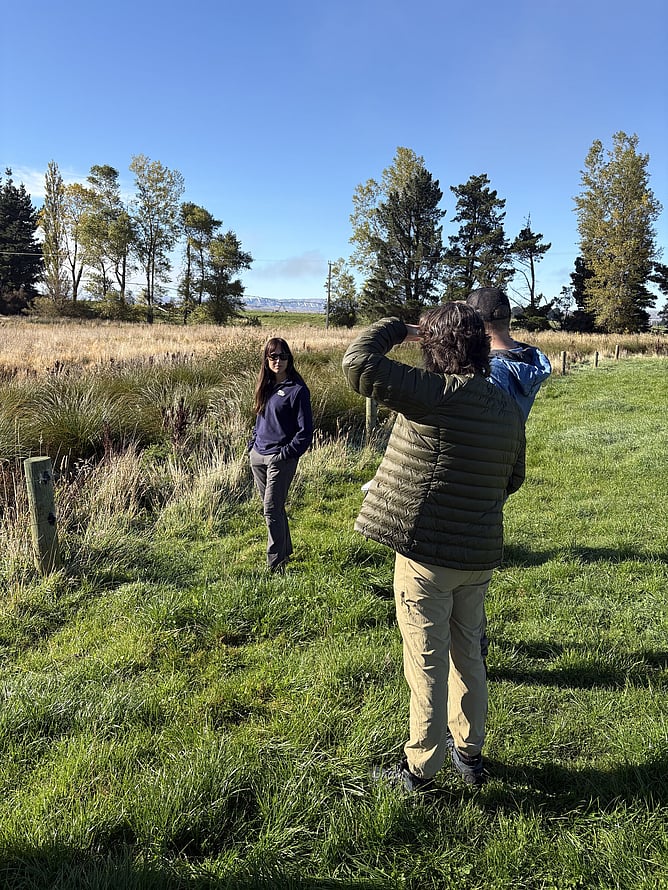
We were fortunate a poor weather forecast did not eventuate and enjoyed a lovely afternoon on 27th February visiting Hills Creek Station and Merino Ridges to showcase their wetlands as part of our wetland restoration project field day. It was great to hear from Tiff and Bevan McKnight on future plans at the current wetland but also looking at other areas across the property.
We were pleased to have a small funding reallocation approved within the Waiora Manuherekia project. This enabled another round of applications for more wetland restoration. We were excited to receive seven applications and have been busy visiting the shortlisted properties this month. The recommendations of these will be presented to the Governance Group about the same time you’re reading our newsletter. We look forward to sharing the confirmed sites with you shortly.
Receiving income from your existing scrub, bush and unused plantations
Many of you will know our Committee Member Bevan McKnight, owner of Merino Ridges. Drawing on his time managing a large mixed farming operation in Victoria, Australia, Bevan has brought valuable experience back to his family farm in Central Otago. He is always looking for ways to improve how things are done and has taken part in a number of on-farm trials and demonstration projects to help make the business more productive and sustainable.
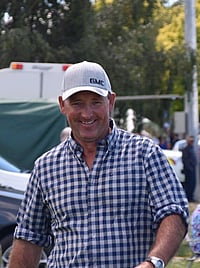
Bevan alongside his wife Tiff, have recently been in discussions with an organisation called Carbonfields. They are a company that will help you monetize existing scrub, bush, plantations and wetlands on farm. Learn more from Geoff Ross of Carbonfields below:
Many of those gullies and steep faces that have scrub coming away in them - can actually earn you income. And a good number of farms through the Manuherekia Valley, Ida Valley and Maniototo qualify. At Carbonfields we aim to reward farmers for a balanced system of pastoral livestock and existing vegetation. This vegetation doesn't need to be fenced, nor your farming operation compromised. We measure your vegetation via satellite and aerial imagery to assess the income potential and then do all the admin required - so we do everything from measurement, to getting you the income. And we do it for you every year.
To be eligible vegetation should be;
In chunks of more than 1 ha in size. And then we ideally need to accumulate a total of 15 ha or more
Have species within it, that will grow to more than 5m or more. So Kanuka, Kowhai, Totara all qualify. And whilst mataguari and caprosmas don't, if you have some other species within, it often will qualify. So even the odd young Kanuka in that scrub, will mean it will qualify.
Have emerged post 1989. So often the burning that was done in the 80s and 90s on our farms means that the vegetation that is there, is relatively new. Which is perfect for this.
We don't take any upfront fees. There is no cost for an assessment. And in the Otago region we have farms earning annual income of $10k to over $300k. Which goes straight to the bottom line.
If you want us to take a look at your farm all we need is;
Your rapid number
name on the title
Approx. total hectares
your contact details.
Just send this to info@carbonfields.co.nz or call 0800789010
And if you need some references in Central Otago, let us know.
Geoff and the team at Carbonfields
Ecofund
We’re pleased to have submitted an application to the Otago Regional Council’s ECOFund for weed control and plant release activities at Hills Creek and Lauder Creek Rail Trail bridge areas where willows and planted natives were removed as part of our project in 2025.
We’re always looking for volunteers to assist in activities at both locations so if you have a group keen to do some volunteering then please contact Clare Hadley, gm@mcg.org.nz. We’ll keep you posted on our application.