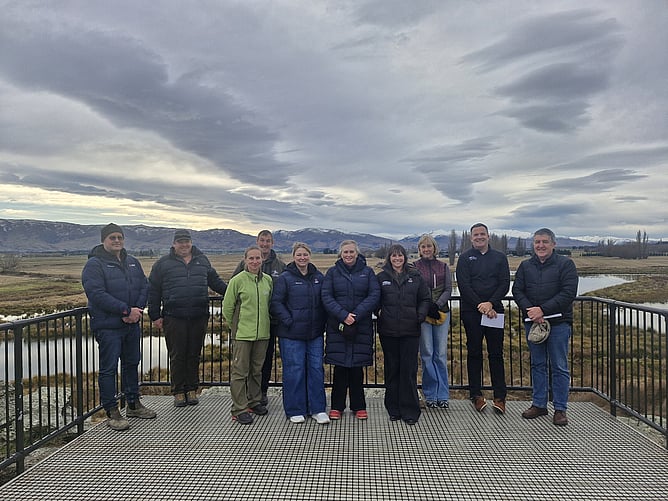
We have now wrapped up all our work on the Waiora Manuherekia project. What started out as $1.9m to be spent in 12-months and seemed almost unachievable turned into a massive success story. The funding was extended for a further year, and it will leave a lasting impact on our catchment.
Anna Gillespie, co-chair of the Waiora Manuherekia Governance Group noted the funding has been hugely beneficial to not only those who directly benefited but also to the wider catchment. As we see a significant momentum shift to many farmers doing their part in improving the environment on their farm - whether the scale be small or large - there is good progress being made.
In the two short years of Waiora Manuherekia we achieved:
Over 18,000 plants planted
Which equated to 6.6 hectares of planting
70 hectares of weed control completed – mostly being crack willow
9km of fencing constructed – keeping stock away from waterways
4 field days hosted, with over 180 people attending
16 wetlands over 14 properties were restored
Quarterly newsletters had a click rate of over 47% which is well above industry standard
The Governance Group enjoyed reflecting on these successes but also the success of collaboration between parties that meant the project was able to run smoothly. Many thanks to all parties involved.
Why Early Wetland Maintenance Matters
Jeremy Anderson, Firgrove, Hills Creek
When Jeremy from Hills Creek purchased his property, Firgrove, the wetland area was heavily overgrown with willow and cork elm.
"The area was full of willow and cork elm, which was quite unsightly," Jeremy explains. "Once we removed the trees, it became obvious that if we didn't act quickly, they would simply regenerate."
With a long-term vision to enhance and beautify the site, Jeremy engaged a landscape architect to develop a planting plan and originally intended to carry out the planting himself. Through the Waiora Manuherekia Project, that vision became a reality, with native planting helping to transform the wetland.
One year on, the results have been encouraging.
"The planting has been very successful, and the plants are generally thriving," he says. "The maintenance we've carried out has also kept on top of any reinfestation of willow, elm and broom."
The restoration has been supported by ongoing maintenance. Habitat Restorations Aotearoa completed scheduled maintenance in late spring and early summer, followed by an autumn visit from the team at Tiaki Maniototo Nursery. Together with Jeremy's own efforts, this early intervention has helped give the young native plants the best possible start.
The experience has reinforced an important lesson: maintenance is just as important as planting.
"To ensure the plants have the best chance of survival, regular maintenance is critical," Jeremy says. "Invasive weeds regenerate very aggressively, and without ongoing maintenance they can quickly re-establish."
The work isn't finished yet. Jeremy is already planning some infill planting this spring to further strengthen the restoration and continue improving the wetland.
His advice for other landowners embarking on a restoration project is simple:
Be proactive. Staying on top of maintenance from the beginning gives native plants the greatest chance to establish and thrive. Waiting too long allows invasive weeds to regain a foothold, making the job much more difficult.
Looking ahead, Jeremy is excited to watch the wetland continue to mature.
"Seeing the area develop and grow has been really exciting. Some species have shown excellent growth in the first year, and I hope it becomes a thriving native habitat that attracts and supports our native birdlife for years to come."